
Beyond The Blueprint
The Hidden Cost of “Good Enough” 3D Visualisation in Interior Design
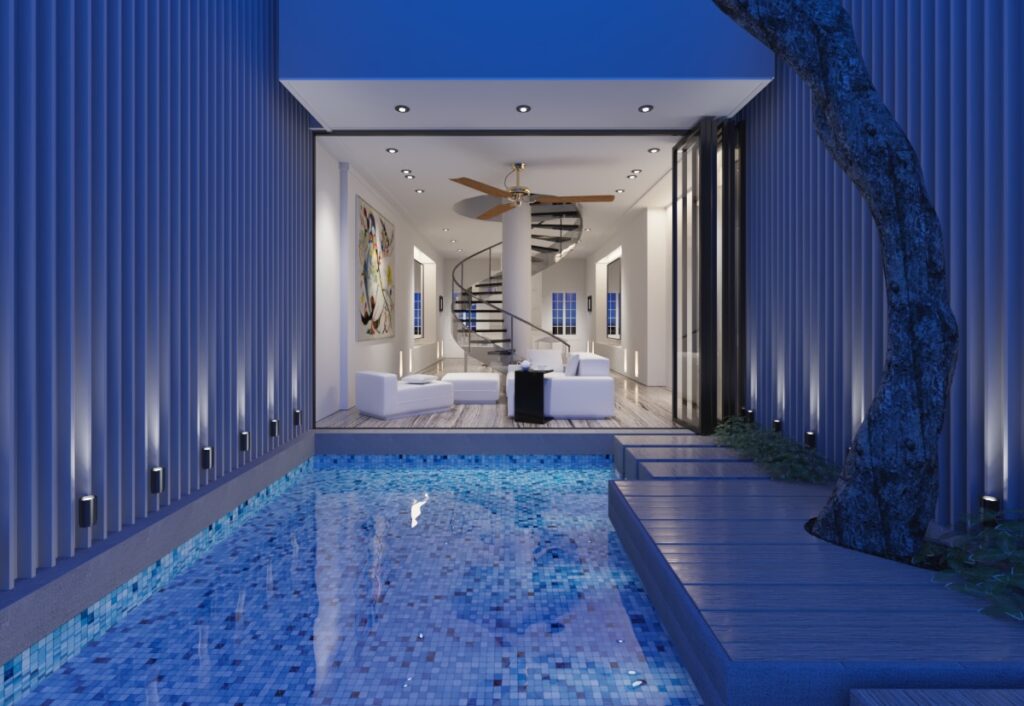
Table of Contents
Introduction
There’s a moment in almost every architectural or interior design project where visuals are treated as a tick-box exercise.
“Something quick.”
“Just enough to show the idea.”
“They’ll get the gist.”
On paper, it makes sense. Save time. Save budget. Keep things moving.
But in reality, “good enough” visuals are often where projects start to slow down.
The Problem Isn’t the Design, Of Course
Experienced interior designers aren’t struggling with the quality of their ideas.
The schemes are strong.
The materials are considered.
The layouts work.
The issue is how clearly that vision is being communicated to the end user.
Because unless a client can fully understand and, more importantly feel the space, they can hesitate when it comes to making final decisions.
And hesitation is where the real cost begins.
Not just financially but, in time, energy, and momentum.
More emails.
More calls.
More revisions.
More time spent explaining something that should already be obvious.
The Psychological Edge: Why “Wow” Matters
Interior design isn’t sold on drawings alone.
It’s sold on emotion, the connection between the space and the people using it.
There’s a clear shift that happens when visuals are done properly.
Clients move from analysing… to instinctively responding.
- With weaker visuals, they question
- With stronger visuals, they connect
That “wow” moment isn’t about polish for the sake of it. It’s about removing doubt.
Because when a client can feel the intention of a space, they stop second-guessing the design and start trusting it.
Trusting the space.
And trusting the designer behind it.
Clarity Changes Everything
When visuals are clear, considered, and emotionally grounded, the entire dynamic shifts.
Clients don’t need convincing, they understand.
They can see how materials interact.
They can feel the lighting.
They can grasp the intent behind the design.
Decisions become faster.
Conversations become simpler.
Construction teams understand the design more clearly.
Projects move forward with confidence.
Final Thought
“Good enough” visuals might move a project forward.
But they rarely move it forward efficiently or effectively.
Because when a design is communicated with clarity, atmosphere, and intent, decisions follow naturally.
In a process where time, trust, and precision matter…
That’s where the real value lies.
…And let’s be honest – who doesn’t want that moment when the client simply says:
“Wow.” 😎